Fluance RT81 review: the best value step up

The Fluance RT81 is the deck we recommend when someone wants the biggest jump in sound quality without leaping to audiophile prices. A wood plinth, an aluminium platter and a proper cartridge add up to a genuine step up. Here is who it is for, and where it asks a little more of you.

Transparency: This article contains affiliate links. If you buy through one of them, we may earn a commission, at no extra cost to you. That is how we fund our testing and keep this site independent. More about how we test.

Contents

Fluance has built a strong reputation for offering more turntable than the price suggests, and the RT81 is its breakout deck. Where an entry-level player keeps everything plastic and integrated, the RT81 brings the ingredients that actually matter to sound: a heavier build, a better platter and a respected, upgradeable cartridge. That is why it is our best value pick, the deck that delivers the most improvement per pound.

Specifications

Model Price DriveSpeedsCartridge Rating Link
Fluance RT81 Elite High Fidelity Turntable ★ Top pick Fluance RT81 Elite High Fidelity Turntable £249.99 Belt-drive, manual33 1/3 and 45 rpmAudio-Technica AT95E (upgradeable) ★ 4.6 View →
★ Top pick
Fluance RT81 Elite High Fidelity Turntable £249.99
Drive : Belt-drive, manualSpeeds : 33 1/3 and 45 rpmCartridge : Audio-Technica AT95E (upgradeable) ★ 4.6/5
View on Amazon →

Our in-depth review

BEST VALUE
Fluance RT81 Elite High Fidelity Turntable - turntable Fluance

Fluance RT81 Elite High Fidelity Turntable

4.6/5

£249.99

Belt-drive, manual · 33 1/3 and 45 rpm · Audio-Technica AT95E (upgradeable)

  • Solid wood plinth at a mid-range price
  • Capable AT95E cartridge fitted
  • Switchable built-in phono stage
  • Clear upgrade path on cartridge and platter
  • Manual operation only
  • No Bluetooth
Sound 4/5
Build 4/5
Ease of use 4/5
View on Amazon →

The verdict from Nathan Cole, hi-fi reviewer

Our best value choice. The Fluance RT81 gives you a genuine step up in sound for not much more money: a real wood plinth, an aluminium platter and a respected Audio-Technica AT95E cartridge that you can later upgrade. It rewards a careful setup and pulls noticeably more detail out of a record than the entry-level decks. If you want the biggest jump in quality per pound and do not mind cueing the arm by hand, this is the rational buy.

Fuller, weightier sound than the budget decks, with a quiet background that lets the music breathe.

Who is the Fluance RT81 for?

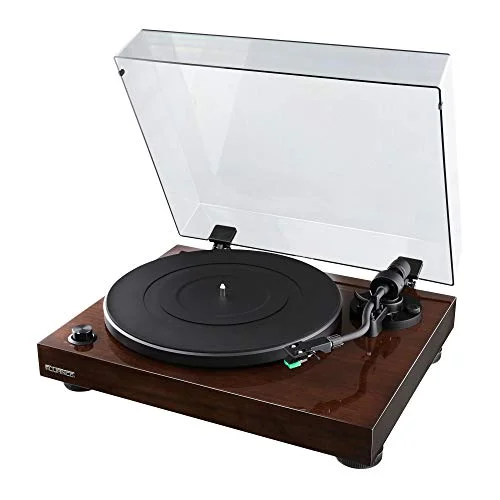
The RT81 is the right deck if you want a clear, audible step up from entry level and do not mind cueing the tonearm yourself. It is aimed at the listener who has decided vinyl is for them and wants a deck that rewards a careful setup and a decent pair of speakers. The fitted Audio-Technica AT95E cartridge is a known, capable performer, and because it is a standard mount you can upgrade it later, so the RT81 can grow with you rather than capping your sound.

It is less suited to someone who wants full automation or wireless convenience. There is no automatic arm and no Bluetooth, so if either of those is a priority the Audio-Technica AT-LP60X or the Sony PS-LX310BT will suit you better. For sound per pound, though, the RT81 is the rational choice.

How the Fluance RT81 performs

Sound

This is where the RT81 justifies its place. The combination of a more substantial plinth, an aluminium platter and the AT95E cartridge produces a fuller, weightier sound than the entry-level decks, with a quieter background that lets the music breathe. Bass has more body, detail is easier to follow, and the whole presentation feels more grown-up. It is not magic; it is the predictable result of better components working together, and it is exactly the upgrade most new listeners are looking for.

Build and setup

The real wood plinth feels reassuringly solid and looks the part on a shelf, and the deck has enough mass to sit stable and resist footfall better than a light plastic player. Setup is straightforward but manual: you balance the counterweight, set the anti-skate and use the cueing lever to lower the arm. None of it is hard, and Fluance includes clear instructions, but it does ask a few minutes of attention that a fully automatic deck does not.

Connectivity

The switchable built-in phono stage is a genuinely useful touch at this level. You can run the RT81 straight into powered speakers or a line input, or switch the preamp off and feed an amplifier with a phono input or a separate phono preamp if you upgrade later. That flexibility means it fits almost any system you already own and any you might build.

The honest downsides: manual only, no wireless

The RT81's compromises are the flip side of its strengths. It is manual, so you lift and lower the arm yourself and stop the platter at the end of a side; for some that is part of the pleasure, but if you want hands-off convenience it is a drawback. And there is no Bluetooth, so a wireless setup is out. Neither costs you anything in sound, and both are the right calls for a deck built around quality rather than gadgetry, but they are worth knowing before you buy.
Frequently asked questions

Q
Is the Fluance RT81 worth the extra money?

For most buyers, yes. Compared with an entry-level deck the RT81 adds a real wood plinth, an aluminium platter and a respected Audio-Technica AT95E cartridge, which together give a clear, audible step up in sound. It is our best value pick because that jump in quality costs only a little more.

Q
Is the Fluance RT81 automatic or manual?

It is manual. You lift and lower the tonearm yourself using the cueing lever, and you stop the platter at the end of a side. That is normal for a deck at this level and part of how it keeps the signal path clean, but if you want a fully automatic deck the Audio-Technica AT-LP60X is the easier option.

Q
Does the Fluance RT81 have a built-in preamp?

Yes, it has a switchable built-in phono stage, so you can connect it to a line input or powered speakers as well as to an amplifier with a phono input. You can also turn the preamp off and use an external one later if you upgrade your system.

Verdict on the Fluance RT81

The RT81 is our best value pick because it spends its money where it counts: build, platter and cartridge, the things that actually shape the sound. The reward is a clear, satisfying step up that you can keep improving as your system grows. It asks you to cue the arm by hand and skips wireless, but those are fair trades for the sound on offer. If you want the biggest improvement per pound and enjoy a little hands-on involvement, this is the deck. If you would rather have automation or Bluetooth, see our AT-LP60X review and Sony PS-LX310BT review; and when you are ready to go further, the Pro-Ject Debut Carbon EVO is the next step up.