What matters most for a first deck
For a first turntable, prioritise three things in this order: how easy it is to set up and use, whether it connects simply to whatever you will play it through, and how kindly it treats your records. A beginner does not need the last word in sound quality; they need a deck that works reliably from day one, plugs into their gear without fuss, and will not damage the records they are just starting to collect. Get those right and the music will be a joy.
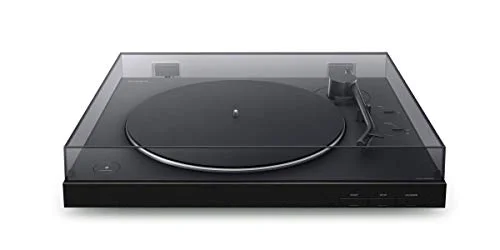
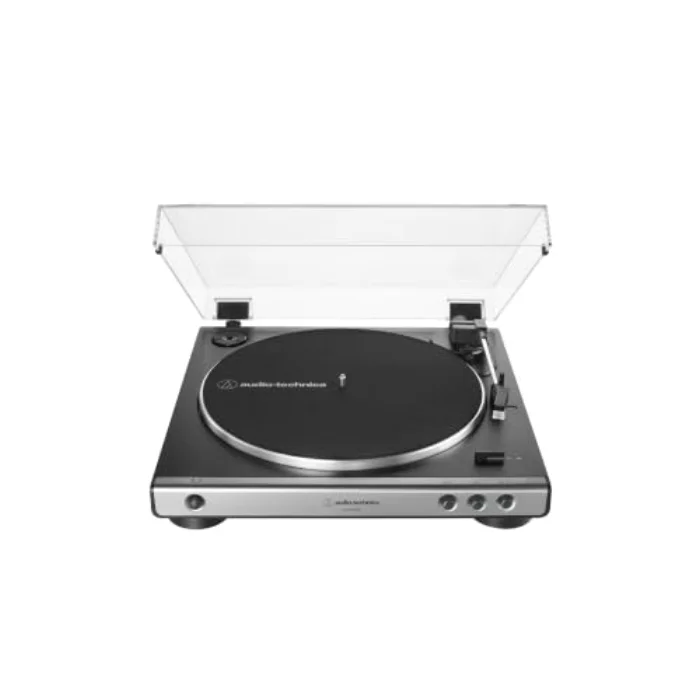
That is why our top recommendation for beginners is the Audio-Technica AT-LP60X. It is fully automatic, has a built-in switchable phono stage so it connects to almost anything, and uses a proper cartridge that tracks gently. If you want a wireless setup, the fully automatic Sony PS-LX310BT adds Bluetooth so you can play records through speakers you may already own. Both remove nearly every step that puts newcomers off vinyl.
Automatic or manual: which suits a beginner?
An automatic deck lowers the arm onto the record, plays the side and lifts the arm back at the end, all on its own. For a beginner, this is genuinely reassuring: there is far less chance of fumbling the cueing or dragging the stylus across a record, which protects both your records and your nerves. It is the friendliest way to start, and it is why we steer most first-time buyers towards automatic decks.
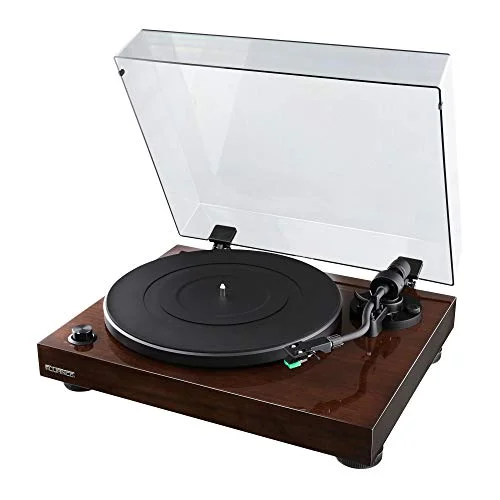
A manual deck, such as the Fluance RT81, asks you to lift and lower the arm yourself using a cueing lever. It is not difficult and many people enjoy the involvement, and manual decks often sound a touch better for the money because the design is simpler. If you are happy to learn a small ritual, a manual deck is a fine first turntable and a great value step up. If you would rather it just played, choose automatic.
Common beginner mistakes to avoid
The biggest mistake is buying a very cheap all-in-one suitcase player. They look fun and cost little, but many use heavy ceramic cartridges that press hard on the groove and can wear your records over time, so they are a false economy if you care about your collection. Spend a little more on a proper entry-level deck and you protect your records and hear them properly.
The second common mistake is forgetting the rest of the chain. A turntable needs a way to amplify its signal and speakers to play it. The simplest beginner route is a deck with a built-in phono stage plugged into powered speakers, which avoids buying a separate amplifier. Our explainer on phono preamps covers exactly what you need, and our buying guide walks through the whole setup so there are no surprises.